A dealer's roadmap to starting a spinel collection in 2026: where to begin on a budget, which colours to chase, how to buy by colour and cut, and how to document, store and pace every acquisition.
To start a spinel collection, begin with a few affordable but characterful stones — grey, lavender, and pink — to train your eye and calibrate your taste, then chase the trophy hues such as fine red, cobalt-blue, and Mahenge neon as your budget and confidence grow. Buy one stone at a time, document every acquisition, and let knowledge rather than impulse set the pace. Spinel rewards patience more than almost any other gem: it is naturally untreated, spans a wider colour range than ruby or sapphire, and still trades at a fraction of the price its beauty deserves. Consider this the roadmap dealers wish every new collector had on day one — how to begin, what to buy first, which colours to chase, and how to care for the suite you build.
What is the smartest way to start a spinel collection?
The smartest start is to collect by colour rather than by hype, because spinel's entire romance lives in its palette. Buy a few inexpensive, well-cut stones first to calibrate your eye, then let each purchase teach you before you make the next. Spinel is magnesium aluminium oxide (MgAl2O4): cubic, singly refractive, and a hard Mohs 8 with no cleavage, which makes it both durable and honest under the loupe — no pleochroism and no facet-doubling to puzzle over. Its refractive index sits around 1.712 to 1.762 and its specific gravity near 3.60, figures a good lab confirms in seconds. Crucially, spinel is very rarely treated. Where roughly ninety per cent of blue sapphire on the market is heated, fine spinel is almost always exactly what nature made it — a fact that turns every well-chosen stone into a genuine one-of-one. Before you spend, spend an evening with the many colours of natural spinel to see the full range you are collecting across, and read is spinel valuable for an honest account of what drives price. When you are ready to browse by hue, our colour collections are organised the same way a collector thinks.
Where should a beginner collector begin on a budget?
Begin with grey, lavender, and pink spinel — the three colours that deliver the most beauty and gemological education per pound spent. These stones let you learn cut, clarity, and colour saturation without the anxiety of a four-figure trophy purchase. Fine grey spinel — steely, metallic, and quietly modern — often sits around $300–500 per carat, making it the ideal first stone: clean, characterful, and forgiving of a learning eye. Lavender spinel, coloured by iron, offers a soft violet-grey that photographs beautifully and reads as far more expensive than it is. Pink spinel, coloured by traces of chromium, is the natural stepping stone toward red: buy pink first, and the leap to a fine red stone later will feel intuitive rather than intimidating. A sensible opening budget of a few hundred pounds can secure two or three genuinely lovely stones — enough to begin a suite and to start recognising what quality feels like in the hand. Resist the urge to spend everything at once; the discipline you learn on these accessible colours is worth more than any single stone you could buy with the same money.
Buy the cheapest stones you will ever regret least, and let them teach you what the expensive ones are worth.
Which spinel colours should you chase over time?
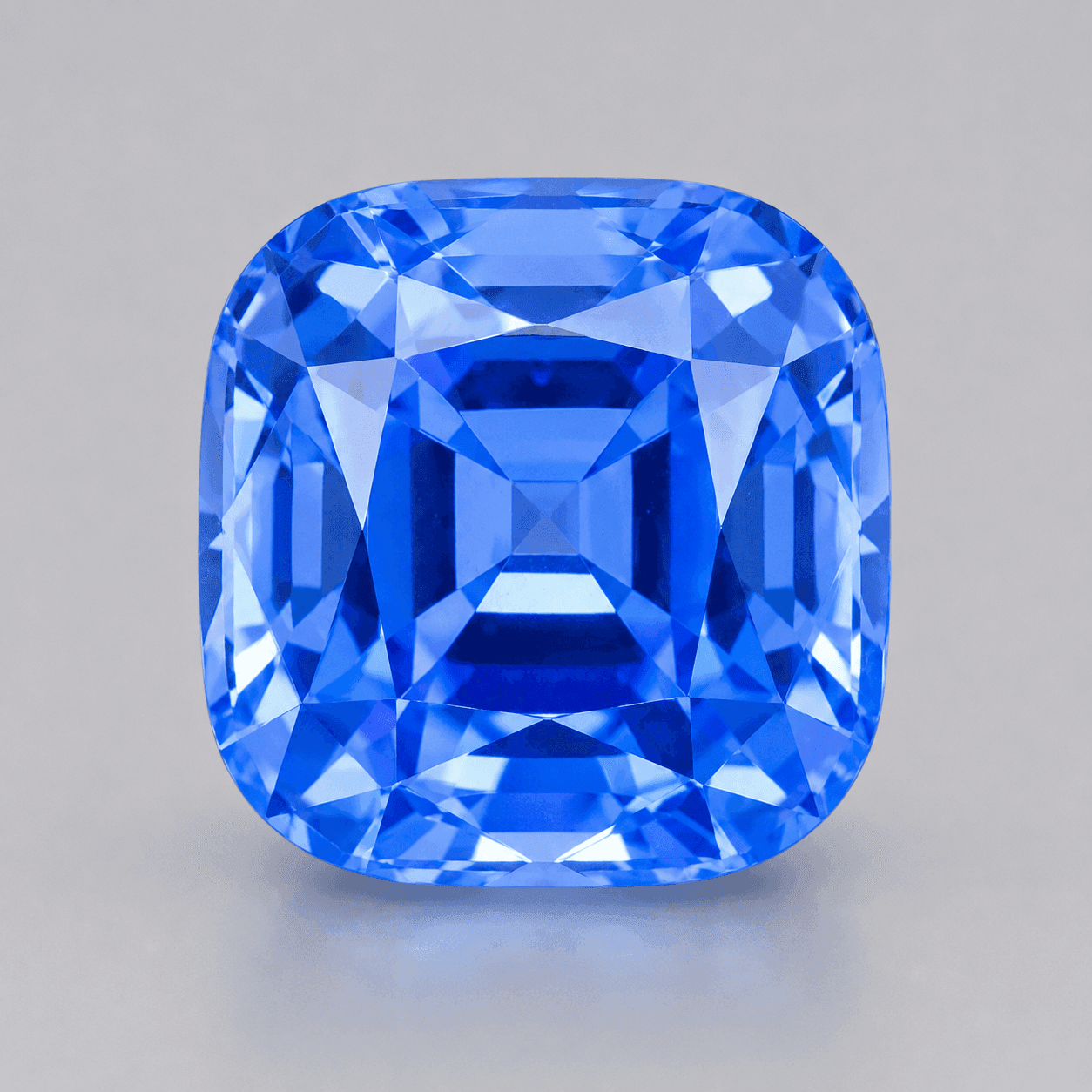
As your eye sharpens, chase the colours that define spinel at the top of the market: vivid red, electric cobalt-blue, the neon pink-red of Mahenge, and the rare colour-change stones that shift from steely blue-grey in daylight to violet or plum under lamplight. These are the stones that reward every hour you spent learning on grey and pink. Red spinel, coloured by chromium, is the historic heart of the species — the gem that spent centuries mistaken for ruby in royal treasuries, including the Black Prince's Ruby set in the British Imperial State Crown. Fine red trades from roughly $2,000 to $10,000+ per carat, yet still often costs around a tenth of a comparable ruby, which is precisely why connoisseurs consider it the smartest luxury in the coloured-stone world. Cobalt-blue spinel is the true trophy: a saturated, almost electric blue caused by traces of cobalt, so rare that top stones exceed $20,000 per carat. Mahenge spinel from Tanzania — a fluorescent, glowing pink-red found in commercial quantity only from 2007 — has become the modern collector's obsession, while genuine colour-change spinel remains one of the species' quietest rarities. To calibrate your expectations across every hue, keep our spinel price guide close; to understand which colours are genuinely scarce, read the rarest spinel colour.
How do you build a coherent colour suite?
A colour suite is a deliberately assembled set of spinels chosen to show the species' range, and it is the single most satisfying way to collect. Rather than accumulating random stones, you build a spectrum — a story you can lay out on a tray. Most collectors organise a suite in one of three ways: by hue (a full run from grey through pink, red, orange, violet, and blue), by origin (Burmese, Vietnamese, Tanzanian, Tajik), or by cause of colour (chromium reds and pinks, cobalt and iron blues, iron greys and violets). Green and yellow spinel are genuinely rare and make dramatic capstone additions once your suite is mature. A suite also disciplines your buying: each new stone must earn its place by adding something the tray does not already have, which naturally slows impulse purchases and raises quality. The table below maps the usual progression, from first stone to trophy.
| Collecting tier | Colours | Typical 2026 budget (per ct) | Note |
|---|---|---|---|
| Entry | Grey, lavender | ~$300–700 | First stones; train the eye, superb value |
| Early suite | Pink | ~$400–2,000+ | Chromium glow; the gateway to red |
| Mid collection | Fine red | ~$2,000–10,000+ | Historic trophy; about a tenth of ruby |
| Aspirational | Mahenge pink-red, colour-change | Premium, colour-driven | Neon fluorescence and phenomenal rarity |
| Trophy | Cobalt-blue | $20,000+ at the top | The rarest vivid blue in the species |
Should you specialise, or collect the whole spectrum?
Both approaches work, but a defined focus almost always produces a finer collection than casual accumulation. A focus is simply a rule you set for yourself — a lane that turns buying from a scattergun into a strategy. Some collectors specialise by phenomenon, chasing only stones that do something optically: the fluorescent glow of Mahenge and Burmese reds, the daylight-to-lamplight shift of colour-change spinel, or the rare star spinels that show asterism. Others specialise by origin, assembling a set that tells the geography of the species — Man Sin and Namya in Burma, Luc Yen in Vietnam, Mahenge and Matombo in Tanzania, and the Pamir Mountains of Tajikistan. A phenomenon or origin focus gives your collection intellectual spine and makes each acquisition a considered answer to a question, rather than another pretty stone in a box. If you are unsure, start broad with a colour suite and let a natural obsession emerge; most collectors discover their focus rather than choosing it on day one.
How should you buy — by colour, cut, and clarity?
Buy colour first, cut second, clarity third — in that order, because saturation and hue drive both beauty and value far more than a flawless interior. A spinel's colour should be vivid and evenly distributed, neither washed-out nor so dark it goes inky under gallery light. Because spinel is singly refractive, a good cut returns light cleanly without the doubling you see in zircon or the pleochroic colour-shifts of sapphire, so reward precise, symmetrical cutting that keeps the stone lively face-up and penalise windowing, off-centre culets, and lumpy, weight-retaining bellies. Eye-clean is the sensible clarity target for most colours, though a few silky inclusions are acceptable — even expected — in a fine Mahenge or Burmese red, where they help confirm natural origin. If you want a repeatable framework for judging hue, tone, and saturation, our guide to spinel colour grading breaks it down, while how to buy natural spinel covers evaluating a stone in the hand. The GIA spinel buyer's guide is a useful independent reference; when you are ready to buy, browse the current loose spinel for sale and compare stones side by side.
Why does a laboratory report matter?
A laboratory report is the document that confirms what you are actually buying — that a stone is natural spinel, whether it has been treated, and often where it was mined. For inexpensive learning stones it is rarely necessary, but for any stone above roughly one carat or any trophy purchase it is worth the cost. A good report removes the two questions that most threaten a collection's value: is it natural, and is it untreated? Because spinel is so seldom treated, most reports simply confirm the good news, but that confirmation is precisely what makes a stone resaleable and insurable years later. Origin reports carry a premium of their own; a documented Burmese or Mahenge provenance can materially affect value. Our guide to spinel certification explained sets out which labs collectors trust and what their reports actually confirm. Keep a simple ledger alongside every certificate — a spreadsheet or a notebook recording date, price paid, seller, weight, dimensions, and your own colour notes — and photograph each stone in consistent lighting. Documentation is what separates a collection from a drawer of pretty rocks.
How should you store and care for a spinel collection?
Store each stone separately and your collection will stay unmarked for a lifetime, because spinel's hardness is a double-edged virtue. At Mohs 8 with no cleavage, spinel is exceptionally durable — it resists knocks and everyday wear far better than most gems and has no weak plane along which it can split. But that same hardness means one loose stone rattling against another will scratch its neighbours, so keep each spinel in its own soft pouch, padded compartment, or folded gem paper. Clean stones with warm water, mild soap, and a soft brush; ultrasonic cleaners are generally safe for clean, untreated spinel, but avoid them for any stone with prominent inclusions or fractures. Keep gems away from prolonged, extreme heat, and store your ledger and certificates separately from the stones themselves, ideally with a digital backup. A collection that is well documented and well stored is also far easier to appraise and insure as its value grows.
How fast should you acquire — and how do you pace a collection?
Acquire slowly and deliberately: one considered stone every few months will build a far finer collection than a flurry of impulse buys. Pacing is not merely about budget — it is how your taste matures and how you avoid the beginner's trap of owning ten mediocre stones instead of three excellent ones. The discipline is simple: let each purchase teach you before you make the next. A steady rhythm also lets you save toward the trophy hues rather than spending your budget on stones you will later want to upgrade. The single most common regret dealers hear is not that a collector paid too much, but that they bought too many of the wrong things too fast — and then had nothing left when the right stone finally appeared.
How to start your spinel collection: a step-by-step plan
Follow a clear sequence and the first year of collecting becomes both cheaper and more rewarding. Here is the path dealers recommend to newcomers.
- Read widely first: spend a week with our colour and price guides before spending a penny, so your first purchase is informed rather than impulsive.
- Buy one inexpensive learning stone — a fine grey or lavender — and study it under daylight, loupe, and gallery lighting until you know it intimately.
- Add a pink and, if budget allows, a second contrasting hue to begin a colour suite and train your eye on saturation.
- Open a documentation ledger from your very first stone: weight, dimensions, price, seller, origin, and photographs in consistent light.
- Decide on a focus — by colour, by origin, or by phenomenon — so future purchases answer a question rather than simply fill a box.
- Save deliberately toward a first trophy — a fine red or a glowing Mahenge — and buy the best single stone your budget allows rather than several lesser ones.
- Commission or request laboratory reports for higher-value stones, and arrange appraisal and insurance as the collection matures.
- Store each stone separately and pace yourself: one considered acquisition every few months, each earning its place on the tray.
Above all, collect the stones that move you. Spinel's quiet secret is that it has never needed treatment or marketing to be extraordinary — its beauty is entirely natural, its finest colours are genuinely scarce, and its prices still lag far behind its more famous rivals. It is a collector's gem in the truest sense: bought for love and knowledge rather than as any guaranteed investment. For a deeper account of the species and its mineralogy, the Wikipedia entry on spinel is a solid starting point. Start small, learn constantly, document everything, and let the trophy hues come to you. When you are ready to add your next stone, our colour collections are the collector's shortcut to the whole spectrum.
- How much money do I need to start collecting spinel?
- Very little. A first stone — a fine grey or lavender spinel — can cost as little as a few hundred pounds, and a starter suite of two or three stones is achievable under £1,000. The trophy colours (red, cobalt-blue, Mahenge) can wait until your eye and budget have matured.
- What is the best spinel colour for a beginner?
- Grey and lavender are the ideal first stones: characterful, well-priced (often around $300–500 per carat), and forgiving of a learning eye. Pink is the natural next step and the gateway toward collecting fine red spinel later.
- Is spinel a good gem to collect if I care about value?
- Spinel is almost always natural and untreated, unlike most sapphire and ruby, and fine red spinel often costs around a tenth of a comparable ruby. Rarity, honesty, and relative affordability make it a connoisseur's choice — but collect for beauty first, never as a guaranteed investment.
- Do I need a lab certificate for every spinel?
- No. Inexpensive learning stones rarely need one, but for any stone above roughly a carat or any trophy purchase, an independent laboratory report is worth the cost to confirm identity, natural origin, and sometimes geographic source.
- How many stones make a proper spinel collection?
- There is no fixed number. A focused suite of five to ten excellent stones — chosen to show the species' colour range — is far more satisfying and valuable than dozens of mediocre ones. Quality and coherence matter more than quantity.
Sources
Facts on this page draw on independent gemmological authorities:
- Gemological Institute of America (GIA) · Institute
- Gübelin Gem Lab · Laboratory
- GRS (GemResearch Swisslab) · Laboratory
- Lotus Gemology · Laboratory