Spinel vs sapphire, from specialist dealers: how cobalt-blue spinel compares to blue sapphire on treatment, price, brilliance and rarity as of 2026.
In any spinel vs sapphire comparison, the headline is treatment: around 90% of blue sapphire is heat-treated, while cobalt-blue spinel is almost never treated. Spinel is a separate mineral — magnesium aluminium oxide — that is single refractive and lighter, prized for untreated neon colour; sapphire is corundum, harder and doubly refractive.
Spinel vs Sapphire: Corundum Versus a Separate Mineral
The first thing to understand about spinel vs sapphire is that these are not two varieties of one gem — they are two entirely different minerals that happen to occur in overlapping colours. Sapphire is a colour variety of corundum, a crystalline aluminium oxide. Spinel is magnesium aluminium oxide (MgAl2O4), a distinct species with its own structure. For centuries the two were confused: the Black Prince's Ruby and the Timur 'Ruby' in the British Crown Jewels are, in fact, red spinels rather than corundum.
That structural difference drives almost everything that follows. Spinel crystallises in the cubic (isometric) system, which makes it singly refractive and gives it a symmetrical habit. Corundum crystallises in the trigonal system, which makes it doubly refractive. On the Mohs scale spinel sits at 8 and corundum at 9 — both are hard, wearable gems, though sapphire is the harder of the pair. For the full mineral background, our complete guide to natural spinel covers the species in depth, and Britannica's entry on spinel sets out the crystallography.
That long confusion is more than trivia — it is a lesson for buyers. If the great royal collections could mistake a red spinel for a ruby for generations, colour alone was never a safe guide, and it still is not. What finally separated the two was measurement: refractive index, specific gravity and crystal structure — the same properties a modern laboratory reads today. The practical message for anyone comparing these gems is to trust tested characteristics over appearance, and to treat any confident claim made without a report as an opinion rather than a fact. It is also why a careful dealer quotes species, origin and treatment on every serious stone, rather than leaning on the name of a colour.
Is 90% of Blue Sapphire Really Heat-Treated?
This is the single most important line in any honest spinel vs sapphire discussion. Roughly 90% of the blue sapphire on the market has been heat-treated — heated to high temperatures to deepen or clarify its colour. The practice is stable, widely disclosed and accepted in the trade, but it means the majority of blue sapphires owe part of their appearance to the furnace rather than to the earth alone.
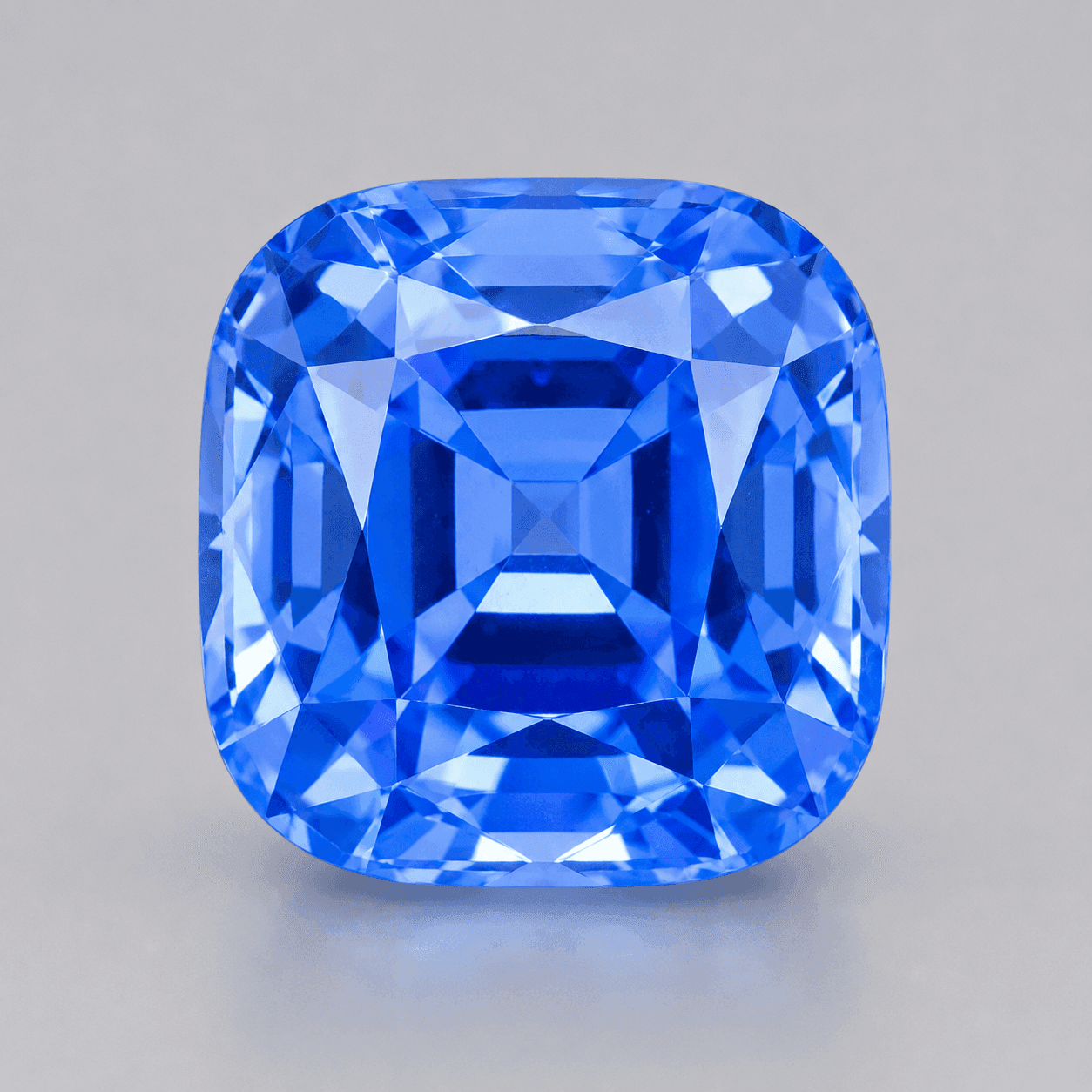
Spinel tells the opposite story. It is very rarely treated, and fine cobalt-blue spinel is almost never treated — what you see is what the crystal formed. For a connoisseur, that is the quiet luxury of the stone: a natural colour with nothing added. We have handled many blue spinels over the years, and being able to state 'no known treatment' on a fine example is something the sapphire market cannot offer at the same scale. Whichever gem you favour, ask for treatment status in writing — our guide to spinel certification explains what a report should say, and independent labs such as Lotus Gemology specialise in reading heat under magnification.
Single vs Double Refraction: Reading the Light
Because spinel is singly refractive and sapphire is doubly refractive, the two behave differently under a loupe — and this is one of the most reliable ways to separate them. In a doubly refractive stone like sapphire, light splits into two rays; look through the table at an angle and the back facet edges can appear doubled. Spinel, being single refractive, never doubles its facets and shows no pleochroism — its colour stays constant as you rotate it.
The refractive index tells the same story numerically. Spinel reads at roughly 1.712 to 1.762 on a refractometer, and because it is isometric it gives a single, steady figure. Corundum reads higher and shows two values that shift as the stone is turned. For a buyer, the practical takeaway is that a competent gemologist can separate the two in seconds — which is exactly why an independent report matters. Our article on how to tell if a spinel is real walks through these tests, and the GIA spinel buyer's guide covers the quality factors.
Brilliance, Colour and Weight Compared
Both gems are bright, but they are bright in different ways. Spinel's single refraction returns light cleanly, without the internal doubling that can very slightly soften a doubly refractive stone — collectors often describe fine spinel as reading crisp or pure. Cobalt is the trace element behind the vivid neon blue that defines top cobalt spinel; iron, by contrast, produces the darker, steely and denim blues seen in more affordable material, along with grey and some violet. Blue sapphire owes its colour to trace elements within corundum, and heat is frequently used to push that colour toward the prized royal and cornflower blues.
Weight is a subtler point that experienced buyers watch closely. Spinel has a specific gravity of about 3.60, while corundum is denser at roughly 4.0. That means a spinel and a sapphire cut to the same millimetre dimensions will not weigh the same — the spinel weighs less per unit of size, so a one-carat spinel tends to look slightly larger face-up than a one-carat sapphire. When you are paying by the carat, that difference is worth understanding. For a fuller view of how these factors set value, see our breakdown of whether spinel is valuable.
Clarity is worth a mention too, because it shapes brightness as much as colour does. Spinel often forms remarkably clean crystals, so a fine cobalt spinel is expected to be eye-clean to the naked eye; when natural inclusions are present, they read as a fingerprint that helps a laboratory confirm the stone is untreated and earth-formed. Blue sapphire spans the full clarity range, and because so much of it is heated, its inclusions are also where a gemologist looks for the tell-tale signs of the furnace. In both gems, a precise cut and clean interior do as much for the light return as the raw hue.
Spinel vs Sapphire on Price: The 2026 Reality
Here is where the dealer's voice matters most. As of 2026, fine cobalt-blue spinel runs from around $2,000 per carat for second-tier stones up to $20,000 or more per carat for top, eye-clean examples. Vietnamese material from Luc Yen is the most coveted for its pure neon blue; Mahenge in Tanzania, where a cobalt-blue deposit came to light around 2021–22, tends to produce larger, more open stones; Sri Lankan spinel carries more iron, giving denim and purple tones, and is the accessible entry point into the colour.
Sapphire pricing works differently, and honesty demands we spell it out. Because roughly 90% of blue sapphire is heat-treated, and corundum is mined in far greater quantity than spinel, commercial blue sapphire is genuinely affordable — that is one of its strengths. The premiums appear at the top, where fine untreated sapphires of good origin command strong prices; those are the fair comparison for fine spinel. In a like-for-like spinel vs sapphire matchup — untreated, eye-clean, saturated colour — you are weighing two scarce natural products, and cobalt spinel is far rarer in absolute terms. For the full ladder of numbers, see our spinel price guide, and to view current stones, browse the cobalt-blue spinel collection.
Cobalt Spinel vs Blue Sapphire at a Glance
The table below distils the comparison into the factors collectors ask about most. Treat it as a quick reference, then confirm any single stone against its own independent report.
| Factor | Cobalt-Blue Spinel | Blue Sapphire |
|---|---|---|
| Mineral | Spinel — magnesium aluminium oxide (MgAl2O4) | Corundum — aluminium oxide |
| Crystal system | Cubic / isometric | Trigonal |
| Mohs hardness | 8 | 9 |
| Refraction | Single (singly refractive) | Double (doubly refractive) |
| Refractive index | ~1.712–1.762 (single reading) | Higher (~1.76–1.77, two readings) |
| Specific gravity | ~3.60 (lighter, larger per carat) | ~4.0 (denser) |
| Typical treatment | Almost never treated | ~90% heat-treated |
| Blue colour cause | Cobalt (vivid neon blue) | Trace elements within corundum |
| Key sources | Vietnam (Luc Yen), Mahenge, Sri Lanka | Mined worldwide |
| Fine 2026 price | ~$2,000 to $20,000+/ct | Broad range; unheated fine stones cost most |
Why the Spinel vs Sapphire Question Is Changing
A decade ago, few buyers framed a gem choice as spinel vs sapphire at all — spinel was the specialist's secret. Two events changed that. In 2007, the discovery of neon pink spinel at Mahenge in Tanzania revived the entire spinel market and showed the trade a saturation few gems can match. Then in 2016, the AGTA added spinel as an August birthstone alongside peridot, giving it a place in the mainstream calendar. Collector demand has climbed steadily since, and the cobalt-blue find at Mahenge around 2021–22 opened a second front. Sapphire remains the household name, but spinel is no longer the underdog it once was — which is exactly why the comparison deserves care. Read more in our August birthstone story and our Mahenge spinel guide.
Durability: Which Holds Up to Daily Wear?
For a stone that will actually be worn, hardness matters. Sapphire rates 9 on the Mohs scale and spinel rates 8, so corundum is the more scratch-resistant of the two — a real advantage in a ring worn every day against grit and hard surfaces. That said, an 8 is still hard by any everyday standard, and spinel has been set in fine jewellery for centuries without trouble. For most collectors the gap is marginal: both gems will comfortably outlast careless handling, and both are helped by a protective setting on high-wear pieces such as rings, and by occasional gentle cleaning. If durability is central to your decision, our guide to spinel hardness and toughness covers wear, care and everyday resilience in detail.
How Should a Collector Choose Between Them?
There is no universally better stone — only the right stone for what you value. If you are weighing spinel and sapphire for a specific purchase, work through these steps in order.
- Define your priority first: the untreated rarity and lighter, brighter character of spinel, or the established name and extra hardness of sapphire.
- Insist on an independent certificate that states the species and, crucially, the treatment status — 'no indications of heating' is the phrase that protects your money.
- View the stone in both daylight and warm indoor light; fine cobalt spinel holds its neon blue, while many sapphires shift under different lighting.
- Compare price per carat against genuine rarity, not just the label — a top cobalt spinel is close to a one-of-one natural object, not a mass-market gem.
- Buy the stone in front of you, not the story around it: judge cut, clarity and colour on their merits, and confirm origin where it affects value.
Work through those steps and the decision usually makes itself. If you would like a structured walk-through before you commit, our natural spinel buying guide is the practical companion to this comparison — and when you are ready to see individual stones, the cobalt-blue spinel collection is the place to start.
Frequently Asked Questions
- Is spinel more valuable than sapphire?
- It depends entirely on quality. Most commercial blue sapphire is heat-treated and affordable, while fine untreated cobalt spinel can reach $20,000 or more per carat as of 2026. Compared like-for-like — both untreated and eye-clean — cobalt spinel is far rarer and often the pricier of the two.
- Is cobalt spinel rarer than blue sapphire?
- Yes. Corundum, the mineral behind sapphire, is mined in large quantities worldwide, whereas fine cobalt-blue spinel comes from only a handful of sources such as Vietnam's Luc Yen and Tanzania's Mahenge. That scarcity, combined with the fact it is almost never treated, makes fine cobalt spinel genuinely uncommon.
- How can you tell spinel from sapphire?
- A gemologist separates them by refraction: spinel is singly refractive with a single index near 1.712 to 1.762, while sapphire is doubly refractive and shows facet doubling and pleochroism. Spinel is also lighter, with a specific gravity around 3.60 versus roughly 4.0 for corundum.
- Is all blue sapphire heat-treated?
- No, but most is. Roughly 90% of blue sapphire is heat-treated to improve colour and clarity, so untreated stones are the minority and carry a premium. Spinel is the opposite: it is very rarely treated, and fine cobalt spinel is almost never heated. Always confirm treatment on an independent report.
- Which is harder, spinel or sapphire?
- Sapphire is harder. Corundum rates 9 on the Mohs scale, while spinel rates 8 — both suit everyday jewellery, though sapphire has the edge in scratch resistance. For durability across settings and wear, see our guide to spinel hardness and durability.
For more comparisons and buying context, see spinel vs diamond, the truth about whether spinel is treated, and how to choose a spinel engagement ring. See also August's own pairing in spinel vs peridot. See also spinel vs amethyst, spinel vs tanzanite and spinel vs alexandrite.
Sources
Facts on this page draw on independent gemmological authorities:
- Gemological Institute of America (GIA) · Institute
- Gübelin Gem Lab · Laboratory
- GRS (GemResearch Swisslab) · Laboratory
- Lotus Gemology · Laboratory