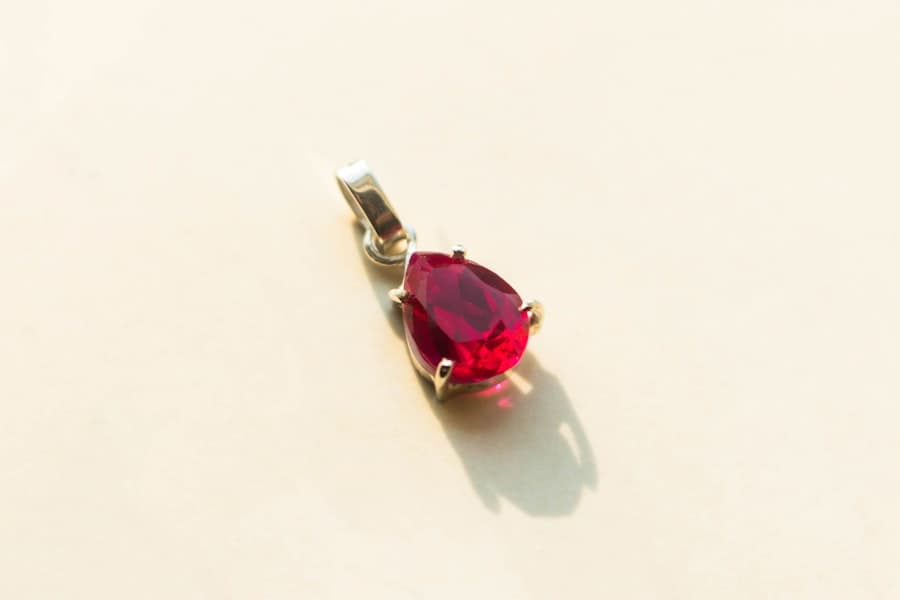
They shared a name for a thousand years. Here is how the two great red gems actually differ — and why it matters.
For nearly a thousand years, some of the most celebrated rubies in the world were not rubies at all. The Black Prince's Ruby in the Imperial State Crown and the Timur Ruby are both red spinel — recognised as a separate mineral only in 1783. The confusion is understandable: spinel and ruby can look almost identical. Here is how the two great red gems actually differ, and how to tell them apart. See also why spinel was mistaken for ruby.
Two Different Minerals, One Shared Red
Ruby is the red variety of corundum (aluminium oxide, Al₂O₃). Spinel is a different mineral entirely — magnesium aluminate (MgAl₂O₄). Both owe their red to traces of chromium, which is why their finest colours overlap so closely. But their crystal structures differ, and that single fact drives almost everything else: hardness, brilliance, and how a gemmologist separates them. For more on durability see spinel hardness & durability.
Treatment: The Difference That Matters Most to Buyers
This is the practical divide. The large majority of ruby on the market is heat-treated to improve colour and clarity, and some lower-grade material is glass-filled. Fine spinel is almost always completely untreated — no heat, no filling. For a buyer, that means a natural spinel is far more likely to be exactly what nature made, with nothing to disclose. Read is spinel treated or heated? and spinel certification explained, and see the GIA spinel buyer's guide.
How Gemmologists Tell Spinel from Ruby
The decisive test is optical. Spinel is singly refractive — its cubic structure bends light one way — while ruby is doubly refractive and pleochroic, showing two slightly different reds as you rotate it. Their constants differ too: spinel's refractive index is about 1.72 and its specific gravity about 3.60, versus roughly 1.76–1.77 and 4.00 for ruby. A gem lab confirms the separation in seconds; both GIA and Gem-A publish the reference figures.
Inclusions help as well. Ruby often shows fine rutile silk, while spinel tends to hold tiny octahedral crystals. Both can glow red under ultraviolet light, so fluorescence alone will not separate them. There is more in spinel inclusions and spinel fluorescence.
Colour: Red, but Not the Same Red
Because ruby is pleochroic, its red can carry a faint purplish or orangey shift; the most prized is the pure, slightly bluish red known as pigeon's blood. Spinel's red is single-toned and often a touch warmer, with a soft, glowing quality collectors love — the vivid pink-reds called Jedi spinel are a fine example. Spinel also spans a far wider palette beyond red; explore it in our red spinel guide.
Price and Value in 2026
Ruby commands the premium. Fine unheated Burmese ruby is among the most expensive gemstones on earth per carat, and even treated ruby carries the weight of tradition and name recognition. Spinel — rarer than most people realise, yet far more affordable — is the connoisseur's value: comparable beauty and durability, usually untreated, at a fraction of the price. See our spinel price guide and the origin story in the Burmese spinel guide.
Spinel vs Ruby at a Glance
The headline differences, side by side:
| Spinel | Ruby | |
|---|---|---|
| Mineral | Magnesium aluminate (MgAl₂O₄) | Corundum (Al₂O₃) |
| Mohs hardness | 8 | 9 |
| Refraction | Single (isotropic) | Double + pleochroic |
| Refractive index | ≈ 1.72 | ≈ 1.76–1.77 |
| Specific gravity | ≈ 3.60 | ≈ 4.00 |
| Typical treatment | None (untreated) | Usually heated |
| Relative price | Excellent value | Premium |
Which Should You Choose?
Both are beautiful, durable choices for a ring or a collection. It comes down to what you value most:
- Choose ruby for tradition, name recognition and top-tier investment prestige — ideally an unheated, certified stone.
- Choose spinel for natural, untreated purity, a softer glowing red, genuine rarity and far better value per carat.
- Either way, judge the individual stone and insist on an independent certificate. Browse certified natural spinel or red spinel.
Frequently Asked Questions
- Is spinel a type of ruby?
- No. Ruby is the red variety of corundum, while spinel is a separate mineral (magnesium aluminate). They were confused for centuries because both are chromium-coloured red, but they are chemically and structurally different.
- Is spinel cheaper than ruby?
- Almost always. Fine ruby — especially unheated Burmese ruby — is among the most expensive gems per carat, whereas spinel of comparable beauty costs far less, which is exactly why collectors prize it as a value gem.
- Is spinel harder than ruby?
- No. Ruby is 9 on the Mohs scale and spinel is 8. Both are more than hard and tough enough for everyday jewellery, including rings, with normal care.
- How can I tell spinel from ruby?
- The reliable way is a gem lab: spinel is singly refractive while ruby is doubly refractive and pleochroic, and their refractive index and density differ. At home you cannot be certain, so buy from a seller who provides an independent certificate.
- Is spinel a good alternative to ruby?
- For many buyers, yes. Spinel offers a similar red, similar durability and usually no treatment, at a much lower price. Ruby still leads on tradition and top-end investment value.
Every red spinel we offer is natural, hand-selected and sold with an independent certificate. Explore the red spinel collection, or read the full overview of natural spinel.
Sources
Facts on this page draw on independent gemmological authorities:
- Gemological Institute of America (GIA) · Institute
- Gübelin Gem Lab · Laboratory
- GRS (GemResearch Swisslab) · Laboratory
- Lotus Gemology · Laboratory


