Spinel became an official August birthstone in 2016, joining peridot and traditional sardonyx. A full guide to spinel's colours, meaning, gifting, and why an untreated one-of-one stone appeals.
Yes — spinel is an official August birthstone. In 2016 the American Gem Trade Association (AGTA) and Jewelers of America added spinel alongside peridot, giving August three stones in total: peridot, spinel, and the traditional sardonyx. Spinel is one of the newest and most collectable additions to the modern birthstone calendar, and for anyone born in August it offers something the other two cannot — a natural, untreated, genuinely one-of-one gem in almost every colour imaginable.
For decades, August had only one modern birthstone: peridot, the sunny yellow-green gem loved for its affordability. But August was long considered short-changed compared with, say, April's diamond or September's sapphire. The 2016 addition of spinel changed that — and for collectors who already knew spinel's story, it was overdue recognition of one of the finest, most historically misunderstood gems in the trade. If you want the full backstory, our companion piece on spinel joining the August birthstones covers the industry decision in detail.
Why was spinel added to the August birthstones in 2016?
Spinel was added in 2016 because the trade recognised it as a distinct, historically significant gem that deserved formal status — and because August needed a companion to peridot. The AGTA and Jewelers of America made the announcement jointly, the first change to the official birthstone list in years. You can read the industry's own summary on the GIA August birthstones page and confirm the addition through the AGTA.
There is a poetic justice to the choice. For most of recorded history, red spinel was mistaken for ruby. The most famous "rubies" of the European crown jewels — the Black Prince's Ruby and the Timur Ruby among them — are, in fact, red spinels. Only in the late 18th and 19th centuries did mineralogy separate the two. Adding spinel to the birthstone calendar in 2016 was, in a sense, the gem finally being credited under its own name after centuries of borrowed glory. It also reflected a surge of connoisseur demand: dealers and collectors had spent the previous decade rediscovering spinel, and formal birthstone status set that appreciation in stone.
Crucially, spinel earned its place on merit as a gem, not as a substitute. It is a magnesium aluminium oxide (MgAl2O4), a Mohs 8 stone with no cleavage, and it is very rarely treated — untreated is the norm. That last point matters enormously for a birthstone: when you give a spinel, you are almost always giving nature's own work, not a heated or diffused product. For context, roughly 90% of the world's blue sapphire is heat-treated. Spinel's honesty is part of its appeal.
What are August's three birthstones — spinel, peridot, and sardonyx?
August has three birthstones: peridot (the modern classic), spinel (added 2016), and sardonyx (the traditional stone). Each has a different character, price bracket, and collectability, which gives August babies more genuine choice than almost any other month. Here is how the three compare at a glance.
| Birthstone | What it is | Colour range | Typical character | Rarity & collectability |
|---|---|---|---|---|
| Spinel | Magnesium aluminium oxide (MgAl2O4), Mohs 8 | Red, pink, cobalt & steely blue, violet, grey, lavender, orange | Brilliant, singly refractive, almost always untreated | Highly collectable; fine reds & cobalt blues are genuinely rare |
| Peridot | Magnesium iron silicate (olivine), Mohs 6.5-7 | Yellow-green to olive green | Warm, doubly refractive, affordable | Widely available; a fine, large stone is the exception |
| Sardonyx | Banded chalcedony (quartz), Mohs 6.5-7 | Reddish-brown & white banding | Opaque to translucent, historically used for cameos & seals | Traditional and inexpensive; prized for carving, not brilliance |
Spinel and peridot are the two most likely to end up in a modern birthstone ring, and they are frequently compared. They could hardly be more different, though: peridot is doubly refractive (you can see facet-edge doubling with a loupe), while spinel is singly refractive with no doubling and no pleochroism. If you are weighing one against the other, our spinel vs peridot comparison lays out durability, colour, price, and wearability side by side. In short, peridot wins on price; spinel wins on brilliance, hardness, colour range, and rarity.
Durability is a quiet but decisive factor for a birthstone meant to be worn year after year. Peridot and sardonyx both sit around Mohs 6.5-7, which is fine for pendants and earrings but shows wear on a daily ring; spinel's Mohs 8 with no cleavage means it takes the knocks of everyday life far better. For August babies who want a single stone to live in a ring for decades, that hardness gap is a real, practical argument for spinel — one we unpack fully in our guide to spinel hardness and durability.
Which spinel colours suit an August birthday?
Every spinel colour suits an August birthday — that is the joy of choosing spinel as your birthstone. Because a single mineral species produces reds, pinks, blues, violets, greys, and oranges, an August baby can pick a colour that fits their personality rather than being locked to one hue. The colour comes from trace elements: chromium for red and pink, cobalt for vivid electric blue, and iron for grey, steely-blue, violet, black, and lavender.
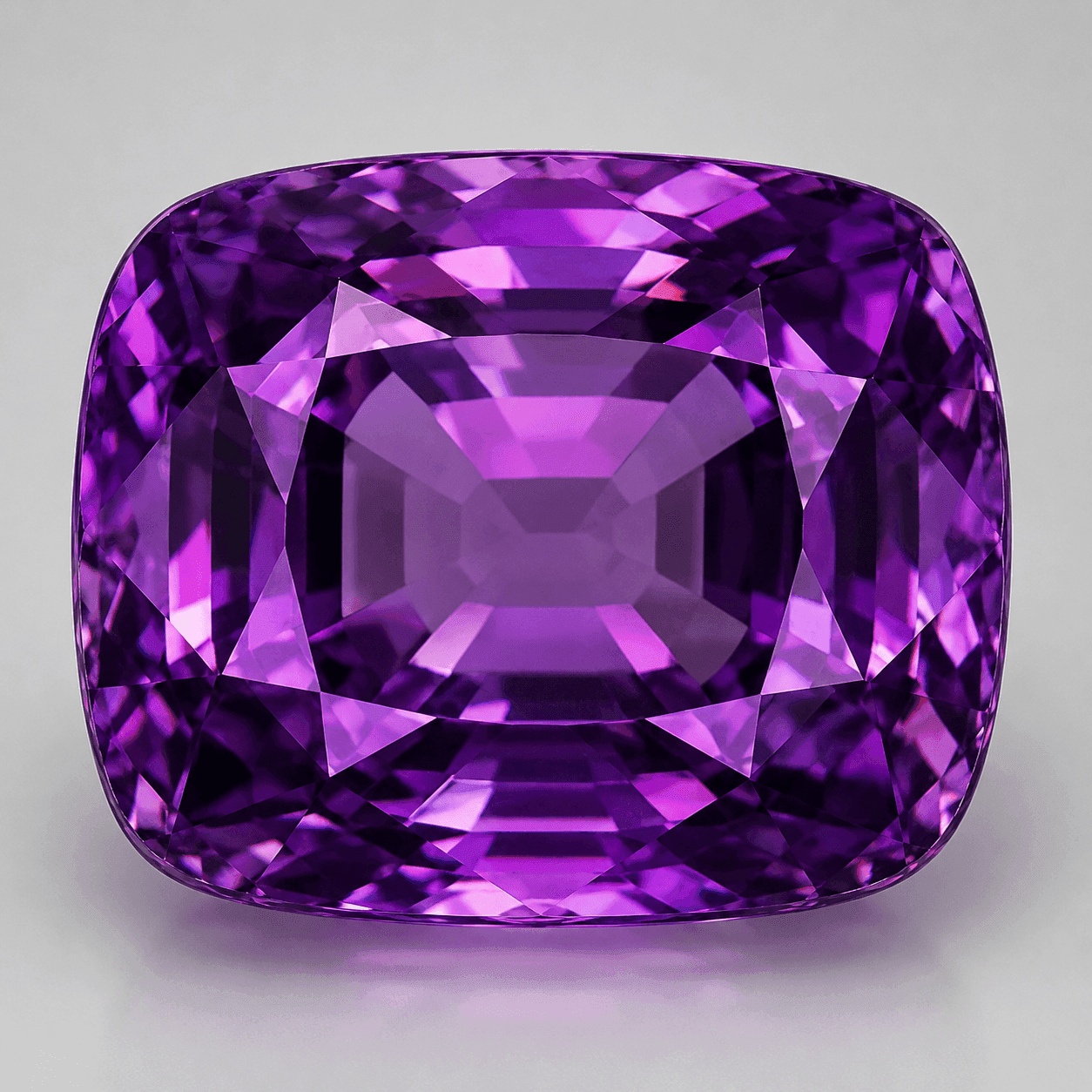
Red is the historic heart of spinel and the colour that fooled kings; see our red spinel guide for why fine reds command $2,000-5,000 per carat, with top stones reaching $5,000-10,000 and exceptional Myanmar reds passing $20,000. At the other end of the spectrum, cobalt-blue spinel is the rarest and most electric of all — top cobalt blues can exceed $20,000 per carat. Between those poles sit the softer, wearable, more attainable colours: purple and violet spinel, delicate pink spinel, and the sophisticated, on-trend grey spinel at around $300-500 per carat. There is even a house favourite in warm salmon-orange — the rare An Phu Sunset from the An Phu gem fields of Luc Yen, Vietnam.
One mineral, a dozen personalities — spinel lets an August birthday be red-blooded, cobalt-cool, or smoky-grey, all in nature's own untreated hand.
For a full tour of the palette, the natural spinel complete guide walks through every hue and the trace chemistry behind it. The practical takeaway for a birthstone buyer: choose the colour first, then the individual stone — because every fine spinel is effectively a one-of-one.
What does spinel mean and symbolise?
Spinel has traditionally been associated with renewal, energy, and endurance — a fitting symbolism for a stone that was hidden under ruby's name for centuries and then re-emerged in its own right. Its meaning is bound up in that history of rediscovery, which makes it a quietly powerful gift for someone marking a fresh chapter. Our dedicated piece on spinel meaning and symbolism explores the cultural threads in depth.
Historically, spinel has also been linked in folklore to vitality, protection, and passion, and in various traditions it was carried as a talisman for stamina and hope. These are traditional beliefs and cultural associations only — they are not medical or scientific claims, and no gemstone should be understood to treat, cure, or affect any health condition. We share them because they are part of spinel's story, not as advice. What can be said factually is that spinel's toughness — Mohs 8, no cleavage — makes it a genuinely enduring stone to wear daily, which is its own kind of symbolism for a birthstone meant to last a lifetime.
Why does an untreated, one-of-one spinel make the best August gift?
An untreated spinel is the best August gift because it is natural, rare, durable, and never mass-produced — each fine stone is unique. Unlike heated sapphire or oiled emerald, spinel is almost always sold exactly as the earth formed it, so a spinel gift is a gift of nature's own work. That authenticity is the emotional core of giving one.
Consider what "one-of-one" really means here. A fine spinel of a particular colour, saturation, size, and clarity has no exact twin — you are not choosing from an interchangeable inventory but claiming a single natural object. For a milestone birthday, that scarcity is the point: the recipient owns the stone, not a stone. Because spinel is so rarely treated, you also sidestep the disclosure minefield that surrounds other coloured gems; our explainer on whether spinel is treated or heated sets out why untreated is the honest default. When you are ready to choose, browse our collections by colour, or view everything currently available in the shop.
Spinel also gifts well because it flatters every recipient. A romantic partner might love a red or pink; a modern minimalist gravitates to grey or steely blue; a colour lover wants violet or cobalt. For a fuller framework on matching stone to person and occasion, our spinel gift guide is built exactly for this. And because spinel spans a wide price range, you can give meaningfully at many budgets — a lively grey at a few hundred dollars per carat, or an heirloom red reaching into the thousands, as our spinel price guide details.
There is also a psychological dimension worth naming candidly. A peridot or a sardonyx is a lovely gesture, but neither carries the quiet weight of true scarcity — you could replace one tomorrow with an identical stone. A fine untreated spinel cannot be replaced like-for-like, and the recipient senses that. When you hand over a gem that geology produced once and will not produce again in exactly that colour and character, the gift becomes a small act of curation rather than a purchase. That is why so many of our August clients choose spinel not despite its rarity but because of it: the stone says, plainly, that thought went into finding it.
How do you choose an August birthstone spinel?
Choosing an August birthstone spinel comes down to colour, cut, clarity, carat, and confidence in the seller. Work through these steps and you will land on a stone that is both beautiful and honestly represented.
- Start with colour. Decide whether the wearer leans warm (red, pink, orange) or cool (blue, violet, grey). Colour drives both beauty and price more than any other factor.
- Judge the cut. Spinel is singly refractive and brilliant when well cut. Look for even light return and no large windows (see-through flat zones) in the centre.
- Assess clarity. Fine spinel is often eye-clean. Minor inclusions are normal and can even confirm natural origin, but avoid anything that dulls brilliance or threatens durability.
- Size to the setting. Because price rises steeply with carat weight in rare colours, choose a size that suits the design and budget rather than chasing a round number.
- Confirm it is natural and untreated. Ask directly, and for important stones request an independent lab report from a respected laboratory.
- Buy from a specialist. A dealer who sells spinel by colour, discloses origin, and stands behind natural, untreated stones is worth more than a bargain from an unknown source.
If this is your first serious coloured-gem purchase, spend ten minutes with our natural spinel complete guide before you commit — it covers the four Cs as they specifically apply to spinel, plus origin, treatment, and value. The single most important habit is buying from someone who specialises: spinel rewards the eye of a dealer who handles it every day, because subtle differences in saturation and tone separate a good stone from a great one.
A final word on why August babies, in particular, tend to fall for spinel: it is the rare birthstone that is simultaneously historic and undervalued, natural and durable, and available in a colour for every taste. A fine red spinel often costs around a tenth of a comparable ruby while offering the same fire and better honesty of origin. For a birthday gem meant to be worn and treasured, that combination is hard to beat — and it is exactly why spinel earned its place on the August calendar in 2016.
- Is spinel really an official August birthstone?
- Yes. Spinel was added as an official August birthstone in 2016 by the American Gem Trade Association (AGTA) and Jewelers of America, joining peridot (the modern stone) and sardonyx (the traditional stone). August therefore has three recognised birthstones.
- What is the difference between spinel and peridot for August?
- Peridot is a magnesium iron silicate (olivine), Mohs 6.5-7, yellow-green, doubly refractive, and inexpensive. Spinel is a magnesium aluminium oxide, Mohs 8, available in many colours, singly refractive, and almost always untreated — generally more brilliant, harder, and more collectable.
- What colour is August birthstone spinel?
- Spinel comes in every major colour, so August birthstone spinel can be red, pink, cobalt or steely blue, violet, grey, lavender, or orange. Chromium creates red and pink, cobalt creates vivid electric blue, and iron produces grey, violet, and lavender tones.
- Is August birthstone spinel treated or natural?
- Spinel is very rarely treated, so an August birthstone spinel is almost always natural and untreated — sold exactly as the earth formed it. This is unusual among coloured gems; by contrast, around 90% of blue sapphire is heat-treated. Always ask a specialist to confirm.
- How much does a good August birthstone spinel cost?
- It depends entirely on colour. Fine grey spinel runs about $300-500 per carat, fine red spinel roughly $2,000-5,000 per carat (top reds $5,000-10,000, exceptional Myanmar reds $20,000+), and top cobalt blue can exceed $20,000 per carat. Spinel spans many budgets.
Sources
Facts on this page draw on independent gemmological authorities:
- Gemological Institute of America (GIA) · Institute
- American Gem Trade Association (AGTA) · Association
- Gübelin Gem Lab · Laboratory
- GRS (GemResearch Swisslab) · Laboratory