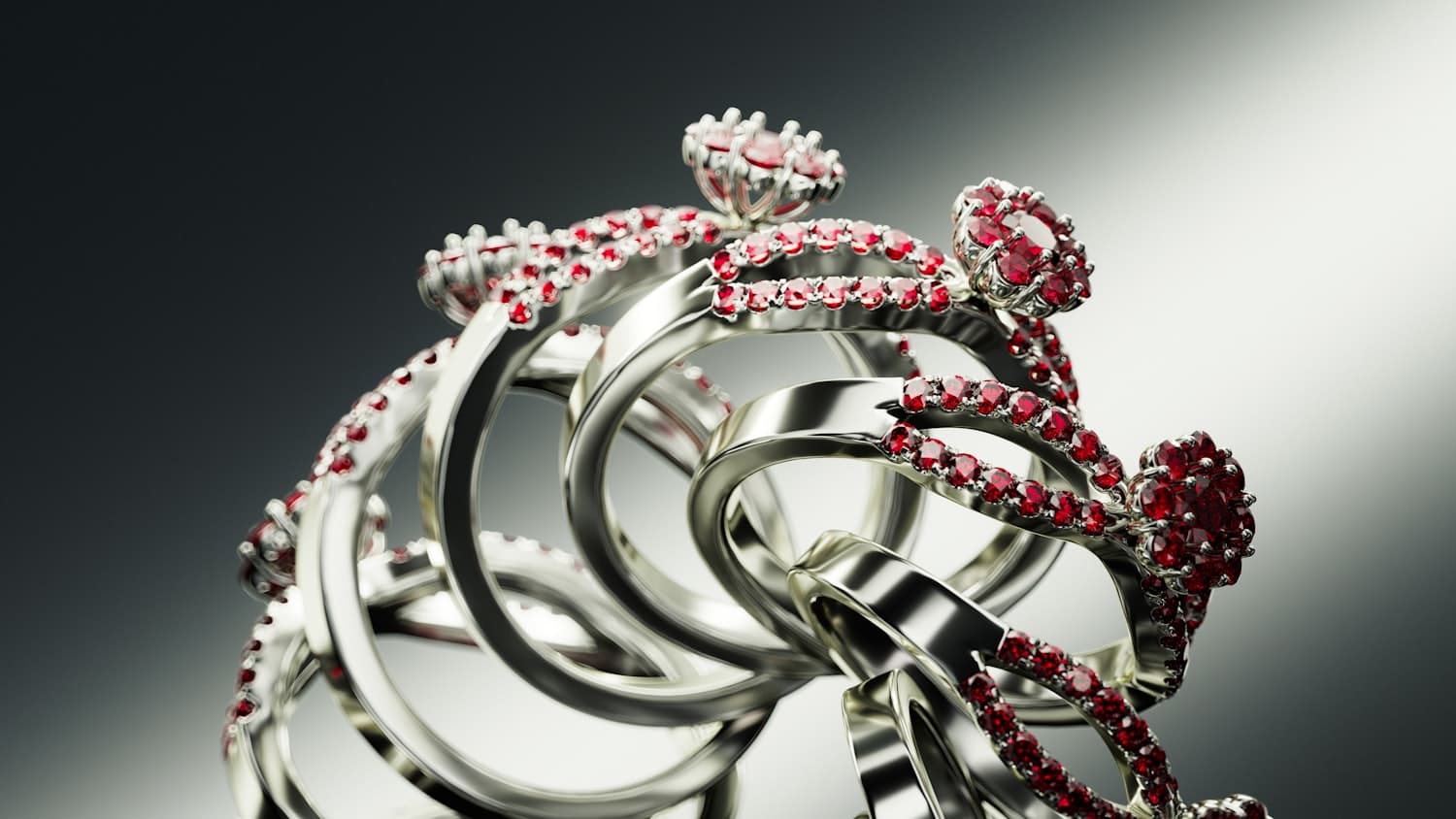
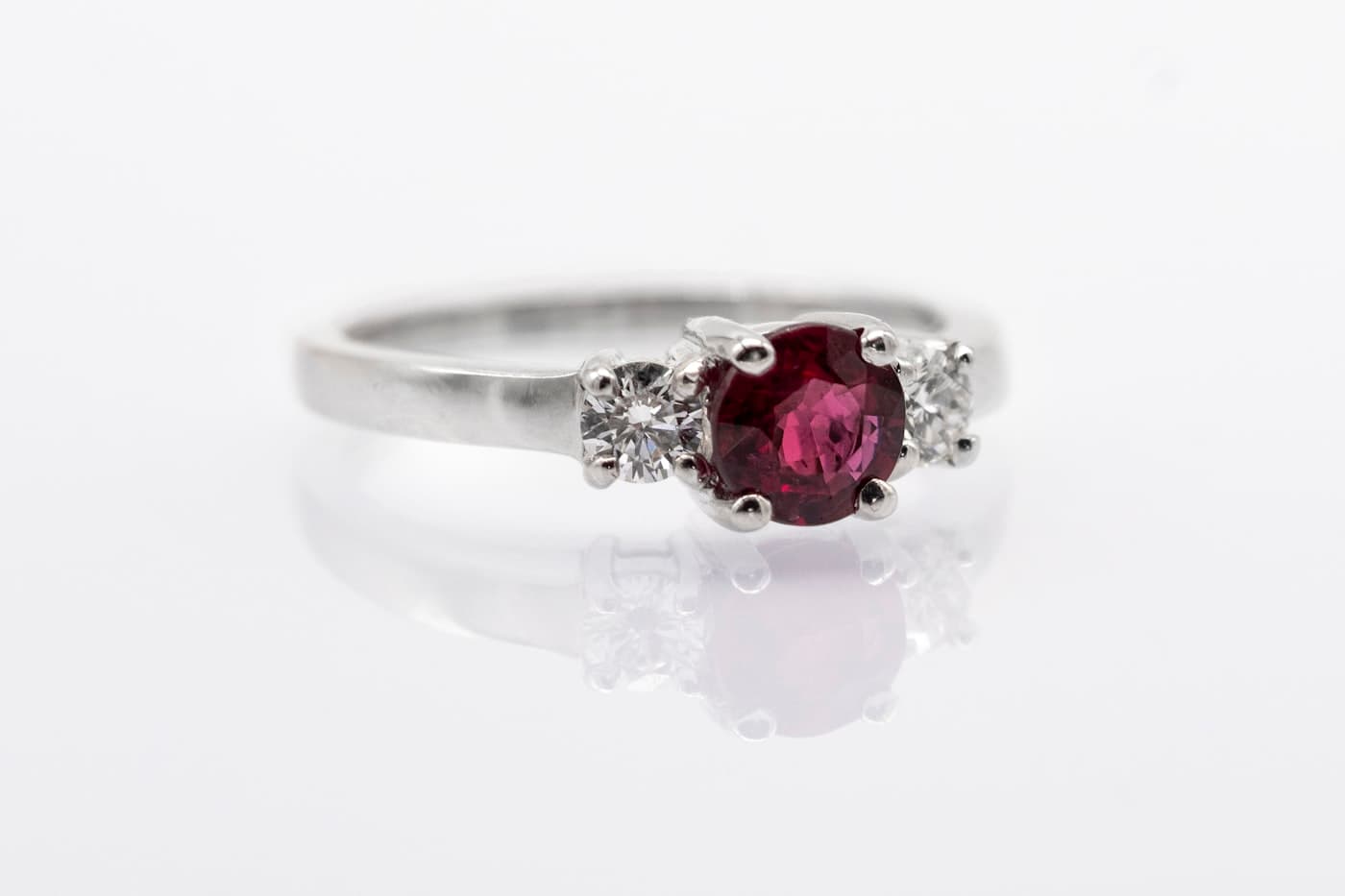
Red spinel is the flagship colour - the chromium red once mistaken for ruby in the crown jewels. Here is what fine red spinel costs in 2026, where it comes from, and how to buy it well.
Red spinel is a chromium-coloured magnesium aluminium oxide (MgAl2O4) prized for a pure, luminous stoplight red that once fooled kings into mistaking it for ruby. As of 2026, fine red spinel runs from roughly $600 to $10,000 per carat, with exceptional Myanmar stones exceeding $20,000 - often about a tenth of a comparable ruby.
What Makes Red Spinel the Flagship Spinel Colour?
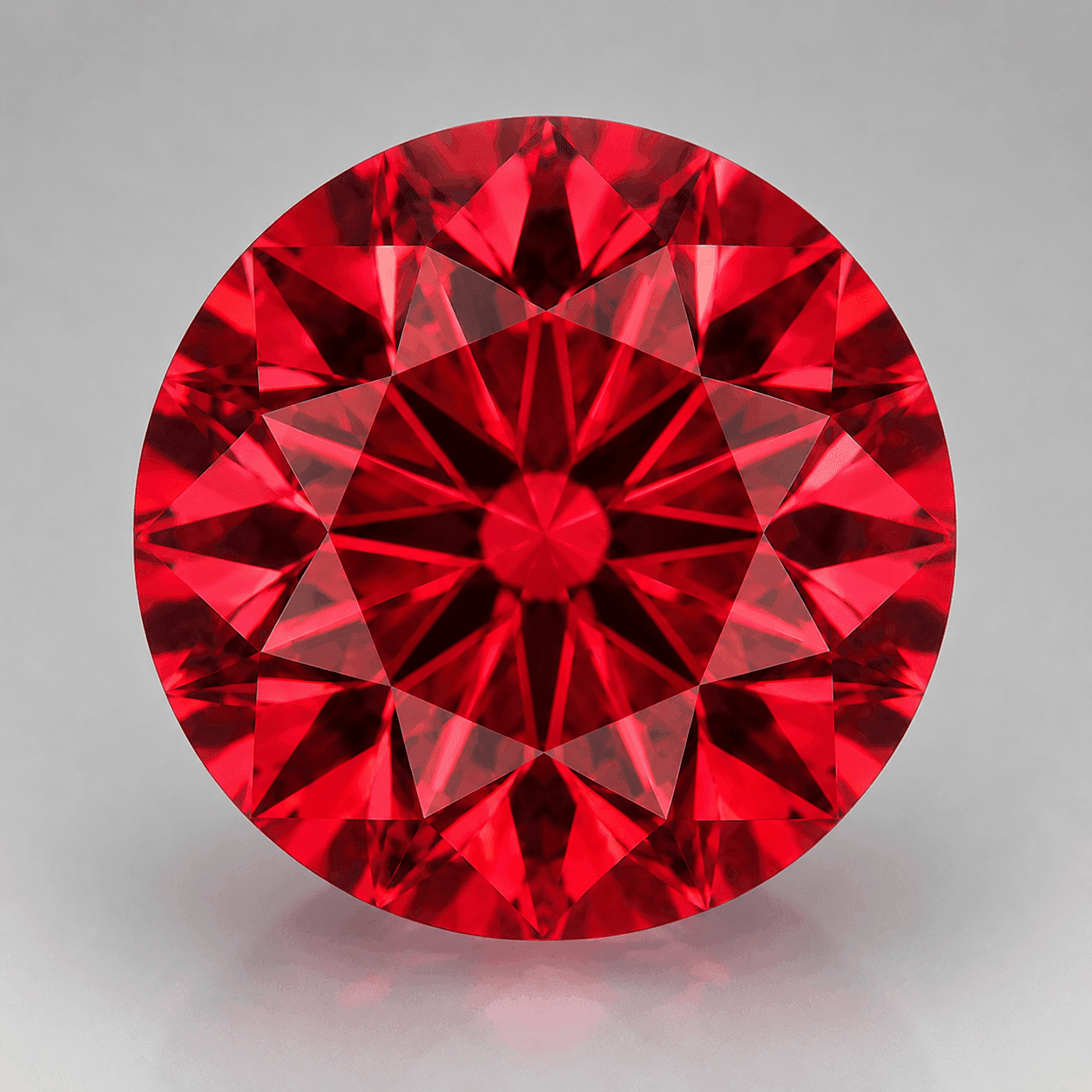
Ask any dealer which colour defines the species and the answer comes back without hesitation: red. Red spinel is the historic flagship of the gem - the stone that hid in plain sight among the crown jewels of Europe and Asia for centuries while everyone called it ruby. At its finest, the gem is difficult to separate from ruby by eye alone, yet it carries a distinct character: a bright, open, almost electric glow the trade nicknames stoplight red. Because spinel is singly (single) refractive, light travels through it without the internal doubling seen in corundum, and the result is a clean, lively red that many collectors come to prefer once they have seen the two side by side.
For the connoisseur, that history doubles as a value story. The finest stones sit quietly beside ruby at a fraction of the price, and they do so without the routine heat treatment that shapes most of the corundum market. If you are new to the species and want the wider view first, our complete guide to natural spinel sets the context; here we concentrate on the red that started it all - where it comes from, what it costs in 2026, and how to buy it without missing.
The Balas Ruby: A History Hidden in Plain Sight
For most of recorded history, spinel was not recognised as a separate gem at all. The great red stones that reached European and Asian courts came largely from the Kuh-i-Lal mines of Badakhshan, in the mountains of present-day Tajikistan, and were known as balas rubies - 'balas' being a corruption of Badakhshan. Two of the most famous 'rubies' in the world are among them. The Black Prince's Ruby, a 170-carat spinel, sits at the front of the British Imperial State Crown; the Timur Ruby, a 361-carat spinel engraved with the names of Mughal emperors, is another. Neither is a ruby. Both are red spinel.
The confusion is understandable. Spinel and ruby share the same colouring element, occur in the same gem gravels, and can look identical once mounted. Only from the 18th century onward, as gemology matured, did science separate them by their optical behaviour and chemistry. For today's buyer, that long misidentification is a gift: it means the market for the gem is still young, still discovering itself, and still priced well below where the quality alone would put it.
The Chromium Story Behind the Colour
The red in red spinel comes from chromium - the very element that colours both ruby and emerald. Trace amounts of chromium substitute for aluminium in the crystal structure and absorb light in the green-to-yellow part of the spectrum, allowing a saturated red to pass through to your eye. In the cleanest stones, that same chromium produces a faint red fluorescence under ultraviolet light and even in daylight, which is what lifts a top stone from merely dark to genuinely glowing.
The enemy of that glow is iron. As iron enters the chemistry, the colour drifts away from pure red toward brick, brownish-red or a deeper, sleepier garnet tone, and the fluorescence fades. This is the single most important thing to understand about pricing: the market pays a steep premium for a bright, slightly-fluorescent red with minimal iron over a stone that is technically red but reads dark. Two stones of the same weight and clarity can differ in price by a factor of ten on colour alone.
Gemologically, spinel is refreshingly honest. It is magnesium aluminium oxide (MgAl2O4), crystallising in the cubic (isometric) system, with a Mohs hardness of 8, a refractive index of roughly 1.712 to 1.762 and a specific gravity near 3.60. Most important for a buyer, spinel is very rarely treated - no heat, no glass filling, no diffusion in the overwhelming majority of stones - whereas the great majority of rubies and blue sapphires reach the market only after heat treatment. When you buy a fine spinel, you are almost always buying exactly the colour nature made. For more on wearability, see our spinel hardness and durability guide; the GIA spinel quality factors cover colour grading in depth.
Where Does the Finest Red Come From?
Two origins dominate the conversation. Mogok, in Myanmar (Burma), is the classic and most coveted source - the same fabled valley that produces Burmese ruby has yielded the world's finest red for a thousand years. Mogok red at its best shows a slightly fluorescent, near-ruby red with superb transparency, and it commands the highest prices anywhere. This is the material that can pass $20,000 per carat at the very top of the market, and a laboratory report naming Mogok origin adds a genuine premium on a stone that already has the colour to earn it.
Mahenge, in Tanzania, is the modern chapter. The 2007 discovery of vivid neon pink-red material there effectively revived the entire market and introduced a new generation of collectors to the species; a second, cobalt-blue deposit followed around 2021-22. Mahenge tends to produce larger crystals and a slightly more open, vivid pink-red, frequently eye-clean in sizes where Mogok would be included or simply unavailable. Both origins are collectible, and which you prefer is partly taste and partly budget. We cover the deposit in full in our Mahenge spinel guide, and its sister colour in the cobalt-blue spinel guide.
Here is the reality we live with on the buying side: red spinel is mined in tiny quantities. There is no steady, calibrated supply the way there is for treated sapphire - no reliable pipeline of matched stones. A whole parcel of rough might yield a single clean stone over one carat. Fine reds above three carats are genuinely scarce; above five carats they become collector events that dealers remember by name. In practical terms, every good stone is one-of-one. You are not choosing from a tray of interchangeable stones - you are choosing this one, or losing it to the next collector.
Red Spinel Prices in 2026
Price tracks four things, in order: colour, clarity, size and origin. The table below reflects the 2026 market for natural, untreated stones as we see them across the trade. Read every figure as a per-carat range, and remember that larger stones climb faster than the ranges imply, because size and rarity compound.
| Tier | Price per carat (2026) | What you get |
|---|---|---|
| Commercial | $100-600 | Darker, brownish or lightly included stones in smaller sizes; a sensible entry point |
| Good | $600-2,000 | Pleasant red with visible life and only minor inclusions; a real collector's starter |
| High | $2,000-5,000 | Vivid, near eye-clean red in a well-cut stone with strong saturation |
| Top | $5,000-10,000 | Pure stoplight red, eye-clean, excellent cut; the connoisseur's target |
| Exceptional Myanmar | $20,000+ | Finest Mogok red in larger sizes with lab-confirmed origin; genuinely rare |
A few notes from behind the counter. Colour outweighs size until you reach the very top tier, where both matter enormously - a one-carat stone with perfect stoplight colour can outvalue a three-carat stone that reads dark or brown. Clarity comes next: a visible inclusion under the table, or a window where the colour drains out, will pull a stone down a tier regardless of its hue. Origin only becomes a price lever at the top: a report naming Mogok can add a meaningful premium, but it never rescues a mediocre colour. For a fuller breakdown across every colour, see our spinel price guide and our honest take in is spinel valuable.
Size deserves its own word. Because gem-quality rough is so scarce, clean stones simply do not occur often in larger sizes, and the per-carat price steps up sharply at each full carat. A superb one-carat red might sit in the high tier; the same colour and clarity at three carats can move into exceptional territory, and at five carats it is effectively a trophy with a price to match. This is why serious collectors buy the best colour they can afford in the largest size they can find, rather than compromising colour to reach a round weight.
Spinel vs Ruby: The Collector's Value Anchor
Here is the comparison that reframes the whole category. A top red spinel is frequently priced at roughly one-tenth of a comparable ruby. Consider what that means: the same chromium colour agent, a hardness well suited to daily wear, often superior clarity and transparency, and none of the heat treatment that most fine ruby has quietly undergone. Where a five-carat fine unheated Burmese ruby can reach well into six figures, an equivalent spinel might sit in the low-to-mid five figures. For the buyer who values the stone itself over the name on the label, that gap is the entire argument.
This does not make spinel a 'cheap ruby' - that framing misses the point entirely. Spinel is its own species, with its own thousand-year history and a fast-growing following among collectors who like being early to a story. The ruby comparison is simply an anchor: it tells you what fair value looks like when a rarer, cleaner, untreated stone trades at a fraction of a more famous one. We lay the two out side by side in spinel vs ruby: what's the difference, and independent laboratories such as Lotus Gemology have published extensively on telling them apart.
How to Buy Red Spinel: A Connoisseur's Checklist
Buying well is a repeatable discipline, not a leap of faith. Work through these six steps in order and you will rarely overpay or misjudge a stone.
- Judge hue first. You want red to very slightly pinkish or orangey red; pure, saturated red is the prize, while brown or garnet undertones pull value down.
- Read tone and saturation. Aim for a medium to medium-dark tone with vivid saturation - bright enough to glow, deep enough to read as true red rather than pink.
- Check clarity with your eye. A fine stone should be eye-clean or very close; small crystals or short needles are normal, but anything that dulls the brilliance is a discount.
- Assess the cut. A well-cut spinel returns light evenly with no dead windows; because rough is scarce, some cutters keep weight over precision, so reward stones cut for beauty.
- Confirm natural and untreated. Ask directly, and for any significant stone insist on an independent report stating 'natural spinel, no indications of treatment'.
- Match origin to budget. Chase a Mogok report only at the top tier; below it, buy the colour in front of you, not the country printed on the paper.
Certification: Proof of a One-of-One Stone
For any red spinel of real value, an independent gemological certificate is not optional. A report from a respected laboratory confirms the stone is natural spinel rather than a synthetic or a look-alike, states whether any treatment has been detected, records the exact carat weight and measurements, and - on premium stones - offers an origin opinion. Because origin can swing price meaningfully at the top of the market, that document is doing real work, not decoration. Laboratories whose reports the trade trusts include GIA, GRS (GemResearch Swisslab), Lotus Gemology, SSEF and Gubelin.
Our standing advice is simple: never buy a four-figure-plus stone on a verbal claim alone. If a seller resists providing a report or arranging one, treat that reluctance as information in itself. A modern report also carries security features and an online reference number you can verify directly with the laboratory before you pay. We unpack what each laboratory tests and how to actually read a certificate in spinel certification explained, and the neutral GIA spinel buyer's guide is a good place to build your eye before you spend.
- Is red spinel more valuable than ruby?
- No - and that gap is the appeal. A top red spinel is often about one-tenth the price of a comparable ruby, despite sharing the same chromium colouring and similar hardness. As of 2026, fine red spinel runs roughly $600 to $10,000 per carat, with exceptional Myanmar stones exceeding $20,000.
- Is red spinel natural, or is it treated like ruby?
- Spinel is almost always natural and untreated. Unlike ruby and blue sapphire - the great majority of which are heat-treated - spinel very rarely sees any enhancement, so its colour is what nature produced. For any significant stone, an independent lab report should confirm no indications of treatment.
- What is the best origin for red spinel?
- Mogok in Myanmar (Burma) is the classic and most coveted source, producing the reddest, most fluorescent stoplight reds that can exceed $20,000 per carat. Mahenge in Tanzania, discovered in 2007, offers vivid pink-reds in larger, cleaner sizes. Both are collectible; the best origin depends on your taste and budget.
- How can you tell red spinel from ruby?
- A gemologist checks refraction: spinel is singly refractive, while ruby is doubly refractive, so ruby shows doubled facet edges under magnification that spinel never does. Spinel is also softer, at Mohs 8 versus 9, and has a different refractive index. A basic laboratory test separates them instantly.
- Is red spinel durable enough for everyday jewellery?
- Yes. It has a Mohs hardness of 8 and no cleavage to speak of, which makes it well suited to rings and daily wear. It sits just below ruby and sapphire at Mohs 9, but comfortably above most other coloured stones. A protective setting is still sensible for high-value pieces.
If you are ready to look, the honest next step is to view stones one at a time - in person or on video - and compare each against the tiers above until your eye sharpens. Browse our current red spinel collection to see what the market is offering right now. And because fine reds are effectively one-of-one, treat the stone you are drawn to today as one you may not find again next season.
To place fine red in context, read our Burmese spinel guide and our comparisons of spinel vs garnet and spinel vs rubellite tourmaline. Related: where pink meets red, and how red spinel behaves under UV in our spinel fluorescence guide. See how red spinel separates from look-alikes in spinel vs zircon and spinel vs tourmaline.
Sources
Facts on this page draw on independent gemmological authorities:
- Gemological Institute of America (GIA) · Institute
- Gübelin Gem Lab · Laboratory
- GRS (GemResearch Swisslab) · Laboratory
- Lotus Gemology · Laboratory