Lavender spinel is a soft, iron-coloured pastel purple gem from Sri Lanka, Vietnam and Tanzania. This 2026 guide covers colour, sources, value and how it beats lavender sapphire.
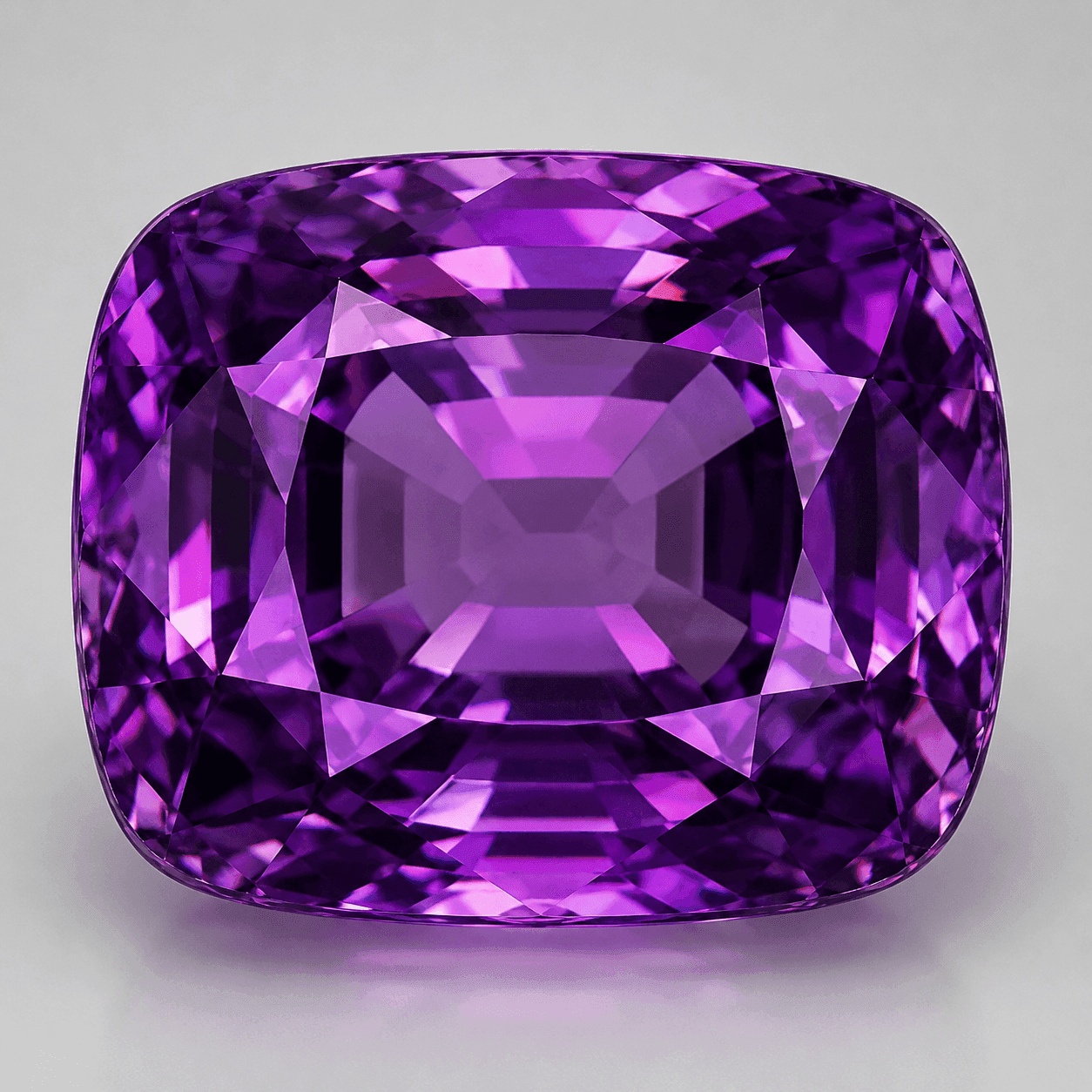
Lavender spinel is a soft, pastel purple spinel — a light lilac-to-mauve gem coloured by traces of iron and frequently carrying delicate grey, pink or violet undertones, sourced chiefly from Sri Lanka, Vietnam and Tanzania, and prized as a natural, untreated, one-of-one pastel. It is the gentlest, most romantic corner of the purple spinel world: quieter than a saturated violet, warmer than a steely grey, and, crucially for collectors, remarkably accessible for a fine natural gemstone that is almost never treated.
For the connoisseur who loves subtlety over spectacle, lavender spinel rewards close looking. Its beauty lives in the play of undertone and the softness of light through a clean, singly refractive crystal. In this guide we cover what lavender spinel actually is, what gives it that lilac glow, where it comes from, how it differs from lavender sapphire, what it costs in 2026, and how to choose and care for a stone you will keep for life.
What is lavender spinel, and how is it different from deep purple-violet spinel?
Lavender spinel is the palest, softest expression of purple in the spinel family — think lilac, mauve and wisteria rather than grape or amethyst. It sits at the gentle end of a spectrum that runs all the way to the richly saturated stones covered in our purple and violet spinel guide, separated from them chiefly by tone (how light or dark) and saturation (how vivid).
Gemmologically, all of these are the same mineral: spinel, magnesium aluminium oxide (MgAl2O4), cubic in crystal structure, singly refractive, Mohs 8, with no cleavage. What changes across the purple range is the balance of trace elements and the resulting depth of colour. Lavender describes the light-tone, low-to-medium-saturation stones — often with a cool, slightly greyish or pinkish cast — while purple-violet describes their darker, more intense siblings. A useful mental model: if amethyst is the reference for saturated purple, lavender spinel is the pastel a few steps lighter, with a luminous, almost lit-from-within quality when it is clean.
Because spinel is singly refractive, lavender stones show no pleochroism — the colour does not shift between two hues as you rock the gem, the way it can in a sapphire or a tourmaline. That single, even body colour is part of what makes a fine lavender spinel feel so serene. For the wider palette these stones belong to, see the many colours of natural spinel, which maps how pink, red, grey, violet and lavender all descend from the same crystal.
What gives lavender spinel its colour?
Lavender spinel owes its soft colour mainly to iron, sometimes with a whisper of chromium adding a pink flush. Iron is the same element responsible for spinel's greys, steely blues and violets, which is why lavender stones so often carry a grey or mauve undertone rather than a pure, candied purple.
This matters for two reasons. First, it explains the family resemblance between lavender and the cooler grey spinel: they are neighbours on the same iron-driven part of the colour map, and many lavender stones read as a grey that has warmed toward purple. Second, it explains why truly pink-leaning lavenders — where a trace of chromium lifts the hue toward lilac-rose — feel a little more precious: chromium is the colouring agent behind the coveted reds and pinks explored in our pink spinel guide, so a chromium-touched lavender borrows a hint of that glow.
One dealer's note worth internalising: lavender is an undertone game. The best examples hold their lilac across a range of lighting — daylight, shade and warm indoor light — without collapsing into flat grey or muddy brown. Weaker stones look pretty under the shop's cool LEDs and disappointingly greyish at home. Always judge lavender in more than one light.
Where does lavender spinel come from?
Lavender and lilac spinel comes principally from Sri Lanka, Vietnam and Tanzania, with occasional stones from Myanmar and Madagascar. Each source leans slightly differently: Sri Lanka toward cool, silvery lilacs; Vietnam toward soft, luminous pastels; Tanzania toward slightly warmer, pinkish lavenders.
Sri Lanka — historic Ceylon — is arguably the classic home of pastel spinel. The alluvial gravels around Ratnapura yield beautifully clean, light-toned stones, and the island's lapidaries have centuries of experience cutting them. If cool, elegant, greyish-lilac is your taste, start with our Ceylon spinel guide. Vietnam's Luc Yen and An Phu fields, better known for vivid pinks, reds and the rare orange we call the An Phu Sunset, also produce gentle lavenders with a soft, glowing character; there is more on the country's output in our Vietnamese spinel guide.
Tanzania — home of the celebrated Mahenge deposits — contributes lavenders that often carry a touch more pink or warmth, a natural cousin to its famous hot-pink material. Across all of these, the defining commercial truth remains: spinel is very rarely treated. Unlike blue sapphire, roughly ninety percent of which is heated, natural spinel reaches you as the earth made it. We cover this in depth in is spinel treated or heated?, and it is a large part of why buying spinel feels so honest.
How does lavender spinel differ from lavender sapphire?
Lavender spinel and lavender sapphire can look similar at a glance, but they are different minerals with different behaviour, treatment norms and price stories. The short version: spinel is singly refractive and almost always untreated; sapphire is doubly refractive, pleochroic, and usually heated.
For a collector, three differences carry the most weight. Optically, sapphire is doubly refractive and pleochroic, so a lavender sapphire can flash a second hue as you turn it, while lavender spinel shows one calm, even colour. On treatment, most sapphire on the market is heat-treated to improve colour and clarity, whereas lavender spinel is virtually always natural and untreated — a cleaner story to tell and to own. And on rarity of hue, pastel lavender is an uncommon, one-of-one look in spinel; you are rarely choosing from a tray of matched stones. The broader head-to-head lives in our spinel versus sapphire comparison.
| Property | Lavender spinel | Lavender sapphire |
|---|---|---|
| Mineral | Spinel (MgAl2O4) | Corundum (Al2O3) |
| Optical character | Singly refractive, no pleochroism | Doubly refractive, pleochroic |
| Typical colour cause | Iron (with trace chromium) | Trace iron, titanium, chromium |
| Mohs hardness | 8 | 9 |
| Usual treatment | None — almost always untreated | Usually heat-treated |
| Colour behaviour | One even body colour | Can shift hue as you rotate it |
| Relative price | Accessible for a fine natural gem | Often higher, treatment-dependent |
Neither is 'better' — but they are honest about different things. Sapphire buys you a touch more hardness (Mohs 9 versus 8) and centuries of name recognition. Spinel buys you an untreated natural gem, a singularly even colour, and, usually, more beauty per pound. For a pastel purple you will actually wear, many collectors find spinel the more romantic and more transparent choice.
What is lavender spinel worth in 2026?
Lavender spinel is one of the most accessible fine spinels you can buy, typically ranging from around $200 to $900 per carat in 2026 depending on colour, clarity, cut and size. That places it well below the reds and cobalt-blues, and roughly in the neighbourhood of fine grey spinel — a genuine sweet spot for collectors.
To set the context, fine red spinel runs roughly $2,000-$5,000 per carat, top red $5,000-$10,000, and exceptional Myanmar red $20,000+, while top cobalt-blue can exceed $20,000 per carat. Grey spinel sits near $300-$500 per carat. Lavender lives comfortably at the affordable end alongside grey, which is exactly why it is such an intelligent entry point into natural spinel. The table below sketches the landscape; for the full picture across every hue, see our spinel price guide.
| Spinel colour | Indicative 2026 price/ct | Character |
|---|---|---|
| Lavender / lilac | $200-$900 | Pastel, iron-coloured, accessible |
| Grey | $300-$500 | Steely, cool, understated |
| Fine pink | $800-$3,000 | Chromium glow, romantic |
| Fine red | $2,000-$5,000 | Classic, about 1/10 of comparable ruby |
| Top cobalt blue | $5,000-$20,000+ | Electric, rare, most coveted |
Within lavender itself, value climbs with clarity and size, and with an undertone that stays true across lighting. A one-carat, eye-clean lilac with a lively glow will command more per carat than a larger stone that greys out in daylight. Because pastels reveal every inclusion, clarity carries real weight here. If you are weighing spinel as a collectible rather than only an adornment, our candid take in is spinel a good investment? is worth reading — we never promise returns, only genuine rarity.
How do you choose a fine lavender spinel?
Choosing a lavender spinel comes down to protecting its two fragile virtues: a clean, glowing pastel colour and an eye-clean interior. Follow a simple order of priorities and judge every stone in more than one light before you commit.
- Set your undertone. Decide whether you want cool (greyish, silvery lilac — think Ceylon) or warm (pinkish lavender — think Tanzania or Vietnam). This single choice narrows the field faster than anything else.
- Judge colour in three lights. Look at the stone in daylight, in shade, and under warm indoor light. A fine lavender keeps its lilac; a weak one slumps into grey or brown. Reject anything that only looks good under cool shop LEDs.
- Prioritise clarity. Pastels hide nothing, so favour eye-clean stones. A small, well-placed inclusion is acceptable; a milky or cloudy zone that dulls the glow is not.
- Reward the cut. Because the colour is light, a precise, well-proportioned cut with no window (a see-through dead centre) does the heavy lifting. A brilliant, lively cut makes a pale stone sing.
- Confirm it is untreated and natural. Spinel is rarely treated, but ask anyway and, for a significant stone, seek an independent report. Our is spinel treated or heated? guide explains what to expect.
- Buy the individual stone, not the category. Lavender is one-of-one; there is no standard lilac. Choose the exact gem that speaks to you rather than a spec on paper.
If you are newer to the species, ground yourself first in our natural spinel complete guide and the practical how to buy natural spinel, then come back to lavender with a confident eye. When you are ready to look at stones, browse our purple and violet collection or the full loose spinel selection — every piece is natural and untreated.
Lavender is an undertone game. Judge it in three lights, and buy the one stone that keeps its glow in all of them.
How do you care for lavender spinel?
Lavender spinel is wonderfully durable for everyday wear: Mohs 8 hardness, no cleavage, and no treatment to fade or damage. Clean it with warm water, mild soap and a soft brush, and it will look as fresh in decades as it does today.
Because there is no cleavage plane, spinel resists chipping better than many gems of similar hardness, and because it is untreated there are no fracture-fillings or coatings to protect. Avoid ultrasonic cleaners if a stone has notable inclusions, keep gems stored separately so a harder stone cannot scratch them, and remove rings before heavy manual work. For the full routine, see how to care for your spinel jewellery. To understand exactly why spinel wears so well, our spinel hardness and durability guide goes deeper.
A note on lore, offered as tradition rather than fact: soft purple gems have long been associated with calm, intuition and gentle affection. These are cultural beliefs, not medical or scientific claims, and nothing here should be taken as health advice. What we can say with confidence is that a natural, untreated lavender spinel is a quietly extraordinary object — and, as an August birthstone (spinel joined peridot on the August birthstone list in 2016), a meaningful one to give or to keep.
For the wider gemmological background on the species — structure, sources and buying factors — the GIA spinel buyer's guide is an authoritative, independent reference to read alongside this collector's guide.
- Is lavender spinel a natural gemstone or is it treated?
- Lavender spinel is natural and, like almost all spinel, virtually never treated. Its soft lilac comes from trace iron (sometimes with a little chromium) present when the crystal formed. This is a major advantage over sapphire, roughly ninety percent of which is heat-treated. For a significant stone you can still request an independent report confirming no treatment.
- What is the difference between lavender spinel and deep purple spinel?
- They are the same mineral separated by tone and saturation. Lavender is the light, pastel, often greyish or pinkish end of the range, while purple-violet spinel is darker and more intensely saturated, closer to amethyst. Lavender reads as lilac or wisteria; purple-violet reads as grape. Both are singly refractive and untreated, so the choice is purely about the depth of colour you prefer.
- How much does lavender spinel cost per carat in 2026?
- Most fine lavender spinel ranges from about $200 to $900 per carat in 2026, depending on colour purity, clarity, cut and size. That is broadly comparable to grey spinel and far below fine red or cobalt-blue material, making lavender one of the most accessible ways into collecting natural, untreated spinel.
- Is lavender spinel or lavender sapphire the better choice?
- Neither is objectively better; they suit different priorities. Lavender sapphire is slightly harder (Mohs 9) and carries the sapphire name, but it is usually heat-treated and pleochroic. Lavender spinel is singly refractive with one even colour, almost always untreated, and typically more affordable. Many collectors prefer spinel for its honesty and its calm, uniform pastel.
- Where does the finest lavender spinel come from?
- The main sources are Sri Lanka (Ceylon), Vietnam and Tanzania, with occasional stones from Myanmar and Madagascar. Sri Lanka is known for cool, silvery lilacs, Vietnam for luminous soft pastels, and Tanzania for slightly warmer, pinkish lavenders. Because each stone is one-of-one, choose by the individual gem and its undertone rather than by origin alone.
Sources
Facts on this page draw on independent gemmological authorities:
- Gemological Institute of America (GIA) · Institute
- Gübelin Gem Lab · Laboratory
- GRS (GemResearch Swisslab) · Laboratory
- Lotus Gemology · Laboratory